
Processing...
Safety Pledge: At Boardwalk Cleaning Co., safety isn’t an afterthought. We are fully bonded, insured, and background-checked. This guide reflects the rigorous safety protocols our own technicians follow every day.
To safely clean your home, you must prioritize proper ventilation, use appropriate personal protective equipment (PPE) like nitrile gloves, and strictly avoid mixing reactive chemicals such as bleach and ammonia. In Austin, safety also means choosing non-toxic cleaners during “Cedar Fever” season to avoid irritating respiratory systems already taxed by local pollen. Additionally, always read labels for dilution ratios and store all chemicals in their original containers out of reach of children and pets.
Austin’s climate is unlike anywhere else. From the legendary “Yellow Dust” of oak pollen in the spring to the bone-chilling “Cedar Fever” in winter and the heavy humidity of our “Second Summers,” your home faces constant environmental pressure. This guide provides a strategic roadmap to keeping your home fresh and healthy year-round, specifically tailored to the Austin, Texas lifestyle.
Keeping your home clean should feel stress-free—not risky or overwhelming. Yet many Austin homeowners overlook safety basics, especially when juggling the fast-paced lifestyles of the “Silicon Hills”.
As a cleaning company with 22+ years of experience, The Boardwalk Cleaning Co. follows rigorous safety protocols to protect both our technicians and your family.
This guide walks you through essential practices to keep your home spotless without the hidden hazards of chemical misuse or physical injury.
Austin homes face unique environmental factors that make safety a top priority:
Pro Tip from Boardwalk Cleaning Co.: During Austin’s pollen surge, we often see yellow dust layered on window sills and ceiling fans. Our teams always dust high-to-low and use microfiber cloths to capture fine particulate without spreading it through the air.
Yes, plant-based or low-VOC (Volatile Organic Compound) cleaners are safer because they significantly reduce the risk of skin irritation, long-term chemical exposure, and asthma triggers. These are especially vital for Austin families during peak allergy seasons when respiratory systems are already compromised.
Mixing certain household products creates toxic gases. Never combine:
Even mild cleaners can cause contact dermatitis or respiratory irritation through repeated exposure.
Pro Tip from our cleaning teams: We always wear gloves, even with non-toxic products—because repeated exposure is what causes irritation over the long run.
Proper airflow prevents fumes and moisture from lingering in your home.
Austin Tip: During cedar spikes, open windows opposite the wind direction to limit pollen entry.
Store supplies:

Check Austin’s city guidelines for hazardous waste drop-off—certain products should never be poured down drains.
With tens of thousands of cleanings completed over 22+ years, our team has seen nearly every cleaning hazard imaginable.
Here are the most common issues we notice in local homes:
Our cleaners follow strict safety protocols: gloves all day, labeled products, ventilation routines, and tools designed to avoid slips, scratches, and chemical mixing.
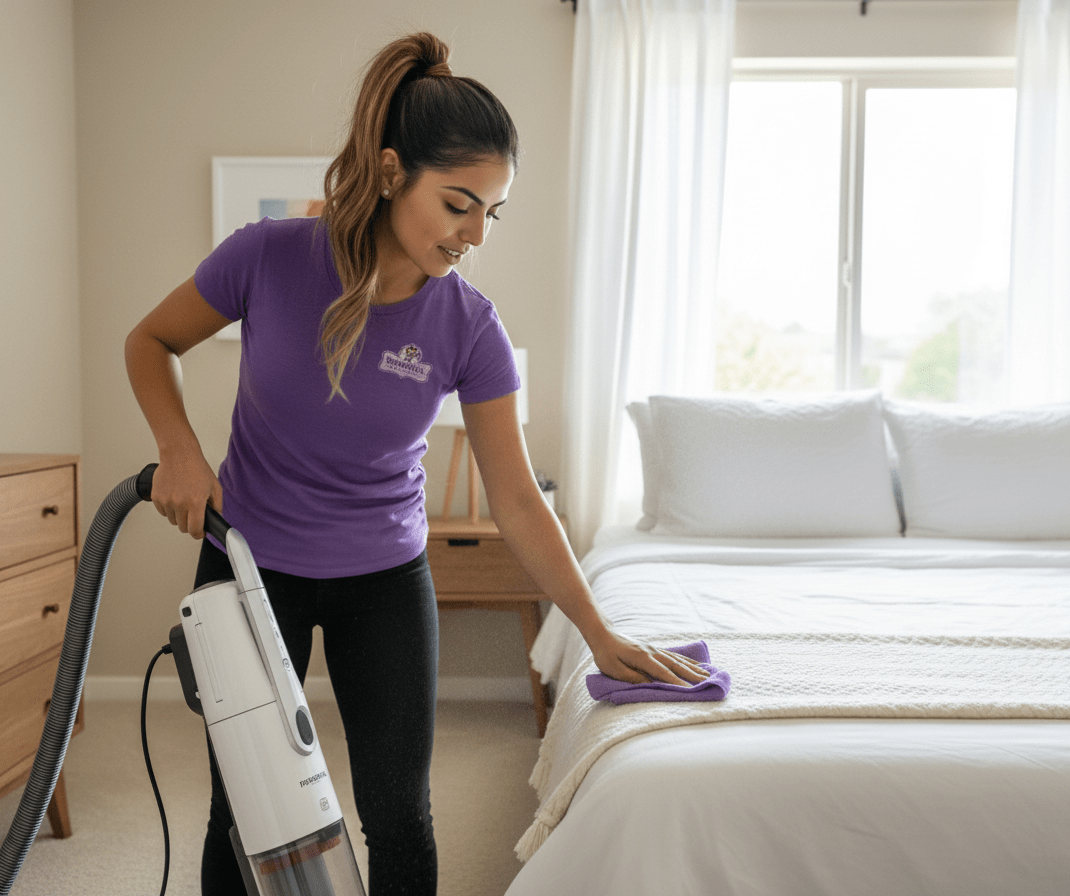
Some cleaning tasks require heavy-duty products or specialized equipment best handled by trained professionals—for your safety and the home’s longevity.
You may benefit from professional cleaning when:
A professional team knows how to clean thoroughly and safely, minimizing exposure to chemicals and allergens while giving you more time for what you love.
After 22+ years of serving Austin, our teams have seen every hazard imaginable—from bleach overuse in poorly ventilated bathrooms to the misuse of vinegar on delicate marble countertops. True home safety requires a “Top-to-Bottom” strategy: choosing the right products, using protective gear, and ensuring constant airflow.
You should store all cleaning supplies in a cool, dry place, away from heat sources, and strictly in their original containers with labels intact. Ensure they are on a high shelf or in a locked cabinet to keep them out of reach of children and pets.
To prevent slipping, use minimal liquid, mop in small sections, and dry-mop immediately afterward to remove excess moisture. Warn all family members when floors are wet, or use “Wet Floor” signs to avoid accidents on slick surfaces like tile or polished stone.
Always use a stable step stool rather than a chair or countertop to reach high areas. Climbing on unstable furniture is a leading cause of home injuries during deep cleaning services and move-out cleaning in Austin.
Check Austin’s city guidelines for household hazardous waste drop-off; many chemicals should never be poured down the drain. Local resources like AustinTexas.gov provide specific locations for safe chemical disposal.
Yes, non-toxic, plant-based, or low-VOC (Volatile Organic Compound) cleaners are safer because they significantly reduce the risk of skin irritation, chemical exposure, and respiratory triggers. In Austin, using non-toxic products is especially beneficial during “Cedar Fever” or Oak pollen seasons. These products allow you to sanitize your home without introducing harsh chemical fumes that can further irritate a respiratory system already taxed by local allergens.
The best way to ventilate your home is to create cross-ventilation by opening windows on opposite sides of the house and running exhaust fans in bathrooms and kitchens. If you are cleaning during a high-pollen day in Central Texas, keep windows closed and instead run your HVAC system’s fan and a HEPA air purifier. This allows you to circulate and scrub the air of cleaning vapors without letting outdoor cedar or oak spores inside.
You should wear nitrile gloves, safety glasses, and a high-filtration mask (such as an N95) when working with liquid sprays or cleaning dusty areas like ceiling fans. Even non-toxic cleaners can cause contact dermatitis over time, and a mask is essential in Austin to prevent the inhalation of fine limestone dust and microscopic cedar spores that accumulate on high surfaces.
No, it is never safe to mix vinegar and bleach because the combination creates toxic chlorine gas, which can cause severe respiratory distress, eye irritation, or even be fatal. To stay safe, always use one cleaning product at a time and thoroughly rinse any surface with water before switching to a different cleaning agent. This is a critical rule for DIY cleaning safety.
Don't risk your health for a clean home. If a task feels overwhelming or requires heavy-duty intervention, let the experts at Boardwalk Cleaning Co. handle it. We are fully bonded, insured, and background-checked, ensuring your home is cleaned to the highest safety standards.